Seeing the Invisible: How AI Vision Technology Is Transforming Quality Control Across Canadian Industry
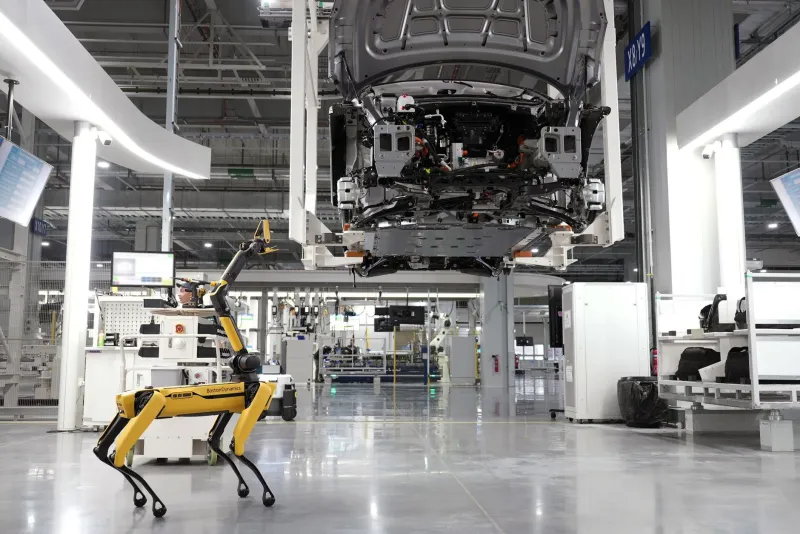
For decades, quality assurance in Canadian manufacturing relied on a combination of human expertise, statistical sampling, and physical gauging tools. Skilled inspectors developed an intuition for imperfection — a trained eye, a calibrated touch. That expertise was invaluable, but it was also finite. Production lines move faster than human perception, and the cost of a single defect escaping to a downstream customer can dwarf the annual salary of an entire inspection team.
Today, a new generation of machine vision systems powered by artificial intelligence is fundamentally changing that equation. These platforms do not merely automate what inspectors once did manually — they extend the boundaries of what is detectable in the first place, identifying microscopic surface anomalies, dimensional deviations, and material inconsistencies at line speeds that would have seemed implausible a decade ago.
The Gap Between Human Perception and Production Reality
Modern manufacturing operates at a pace that creates an inherent tension with traditional quality control methods. A high-volume automotive stamping press can cycle hundreds of parts per hour. A food packaging line may process thousands of units per shift. Inspecting every item by hand is economically impossible; inspecting a sample introduces statistical risk.
AI-powered vision systems resolve this tension by operating continuously and consistently, without fatigue, distraction, or the variability that characterises human inspection. Cameras capture high-resolution images of every component or product unit as it moves through the production process. Deep learning algorithms — trained on thousands or millions of labelled images — analyse those frames in milliseconds, flagging anything that deviates from an acceptable standard.
Critically, these systems learn. Unlike traditional rule-based machine vision, which requires engineers to explicitly define every defect type, modern AI platforms improve their detection accuracy over time as they encounter new defect variants. This adaptability is particularly valuable in sectors where product specifications evolve frequently.
Automotive Manufacturing: Precision at Scale
Ontario's automotive sector — home to assembly and component manufacturing operations for some of the world's largest vehicle producers — has been among the earliest adopters of AI vision technology in Canada. The stakes in automotive quality are extraordinarily high. A cosmetic defect on a body panel may be unacceptable to a customer; a structural flaw in a safety-critical component can carry far graver consequences.
Several Tier 1 and Tier 2 suppliers operating in the Windsor-Toronto-Oshawa corridor have integrated AI vision inspection into stamping, welding, and painting operations. One common application involves inspecting welded seams for porosity, undercut, or incomplete fusion — defects that are difficult to detect visually but can compromise joint integrity. Vision systems equipped with structured lighting and trained neural networks can classify these conditions with a consistency that manual inspection cannot match.
Beyond defect detection, these platforms generate rich data sets that enable process engineers to identify the upstream conditions — press tonnage variation, tooling wear, material batch inconsistencies — that correlate with defect emergence. This moves quality assurance from a reactive function to a predictive one, allowing manufacturers to intervene before defect rates climb.
Aerospace Fabrication: When Tolerance Is Measured in Microns
Quebec's aerospace manufacturing cluster, centred on the greater Montréal region, represents one of the most demanding environments for quality control technology anywhere in the world. Components destined for commercial aircraft and defence systems must meet dimensional tolerances measured in fractions of a millimetre, and the documentation requirements imposed by regulatory bodies such as Transport Canada and international equivalents are exhaustive.
AI vision systems are being deployed in this sector to inspect composite panels, machined components, and assembled sub-systems. One particularly compelling application involves the inspection of drilled holes in composite airframe structures — a process that must verify diameter, edge quality, and the absence of delamination with absolute reliability.
Traditionally, this work required time-consuming manual measurement using contact probes or optical comparators. Automated vision systems equipped with telecentric lenses and AI-driven measurement algorithms can perform equivalent inspections in a fraction of the time, while simultaneously generating the digital records that regulatory compliance demands. For manufacturers competing for contracts against international suppliers, the speed advantage is not trivial.
Food Processing: Safety, Consistency, and Consumer Trust
Alberta's food processing industry — encompassing beef and pork processing, grain handling, and packaged goods manufacturing — faces a distinct set of quality imperatives. Here, the primary concern is not dimensional precision but the detection of foreign material contamination, packaging integrity failures, and labelling errors that could expose consumers to harm or companies to costly recalls.
AI vision platforms deployed in food processing environments must contend with challenging conditions: variable ambient lighting, product surfaces that change with moisture and temperature, and the need to operate in facilities subject to rigorous sanitation protocols. Modern systems address these challenges through robust enclosure designs and algorithms trained specifically on the variability inherent in natural food products.
Applications include the inspection of packaged meat products for seal integrity and correct labelling, the detection of bone fragments in processed poultry, and the identification of foreign objects on conveyor lines before products enter packaging. In an industry where a single recall event can cost millions of dollars and cause lasting reputational damage, the return on investment for reliable automated inspection is readily quantifiable.
The Economics of Intelligent Inspection
The business case for AI vision adoption in Canadian manufacturing rests on several converging factors. Direct cost reduction through the elimination or redeployment of manual inspection labour is the most immediately visible benefit, but it is often not the most significant one over a multi-year horizon.
Reduced warranty claims, lower scrap and rework rates, and the avoidance of customer-facing quality escapes collectively represent a far larger financial impact for most manufacturers. Additionally, the data generated by AI vision systems provides a foundation for broader continuous improvement programmes, creating value that extends well beyond the inspection function itself.
Canadian manufacturers also face a competitive reality that makes quality technology adoption increasingly urgent. Global supply chains are demanding higher quality standards with shorter lead times, and domestic producers must match the capabilities of international competitors who have been investing in automation aggressively. AI vision systems offer a means of achieving that parity — or establishing an advantage — without necessarily scaling headcount.
Looking Ahead
The trajectory of AI vision technology points toward capabilities that will further expand its applicability across Canadian industry. Advances in three-dimensional imaging, hyperspectral analysis, and edge computing are enabling inspection of geometries and material properties that current systems cannot address. Integration with collaborative robotics platforms is creating closed-loop systems where defect detection triggers immediate corrective action without human intervention.
For Canadian manufacturers committed to maintaining relevance in an increasingly automated global economy, the question is no longer whether intelligent vision systems belong on the production floor. The question is how quickly and effectively they can be deployed — and how deeply their insights can be embedded into the operational fabric of the enterprise.
The answer to that question will, in no small measure, determine which Canadian manufacturers lead their sectors into the next decade.