Steel, Software, and Strategy: The Practical Roadmap for Modernising Canada's Aging Factory Floors
The Weight of Industrial History
Canada's manufacturing sector carries considerable legacy. From the steel fabricators of Hamilton to the pulp and paper mills dotting northern Ontario and British Columbia, a significant portion of the country's industrial base was built during an era when analogue controls, pneumatic systems, and manual inspection were simply the standard. These facilities represent decades of investment, institutional knowledge, and community employment — assets that cannot, and should not, be discarded lightly.
Yet the competitive pressure to modernise has never been more acute. Supply chain disruptions, tightening labour markets, and the rising expectations of global customers are converging to make automation not merely desirable, but essential. The challenge facing plant managers and operations directors across the country is not whether to upgrade, but how to do so intelligently — and affordably — within the constraints of an operating facility.
Why Starting From Scratch Is Rarely the Answer
Greenfield automation projects — those built entirely from the ground up — capture the imagination precisely because they offer a clean slate. Every sensor, conveyor, and control system can be specified from the outset with integration in mind. But for the vast majority of Canadian manufacturers, greenfield is a luxury that neither the balance sheet nor the operational calendar can support.
Retrofitting, by contrast, demands a more nuanced engineering approach. It requires working around existing production schedules, interfacing with equipment that may predate modern communication protocols, and making incremental improvements that collectively yield transformative results. Done well, it is arguably the more sophisticated undertaking — and the one with the most direct relevance to Canada's industrial reality.
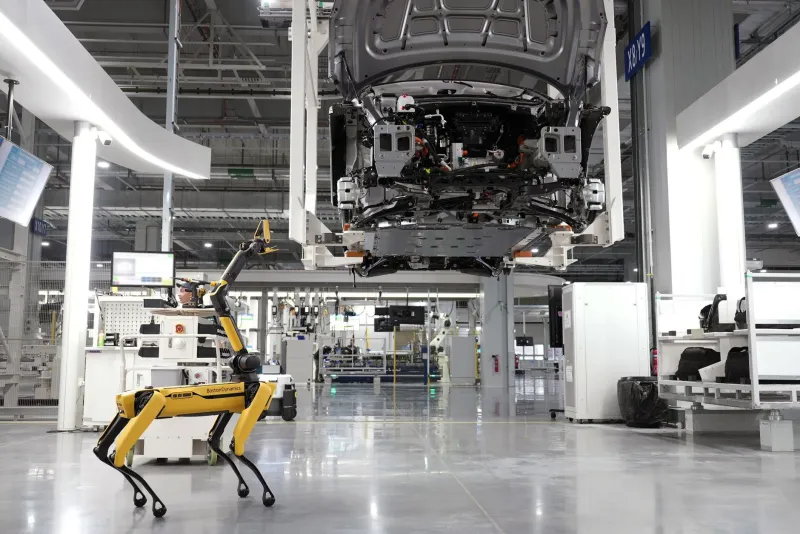
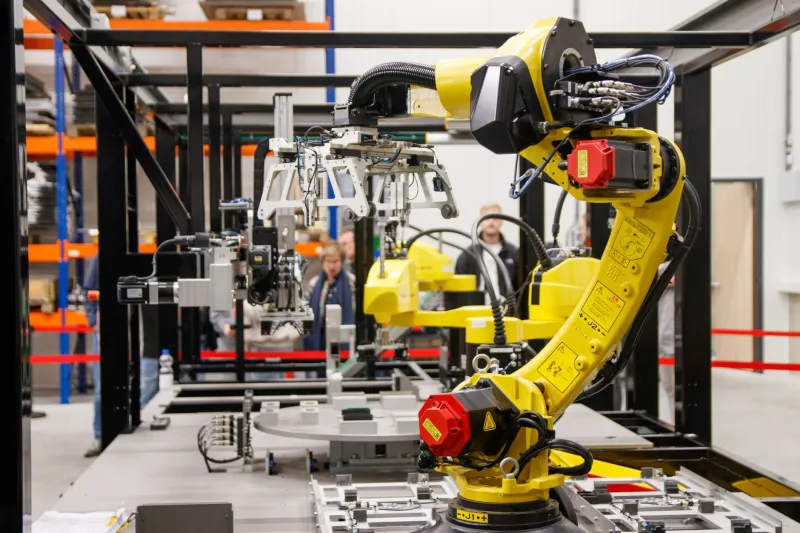
The good news is that the technology landscape has shifted substantially in favour of retrofit projects. Modern industrial IoT sensors are designed to attach to legacy machinery without invasive modifications. Edge computing platforms can translate older equipment signals into data streams compatible with contemporary manufacturing execution systems. And collaborative robots — cobots — can be deployed alongside human workers without requiring the extensive safety caging that earlier generations of industrial automation demanded.
Common Hurdles: Capital, Compatibility, and Culture
Speak with operations leaders at mid-sized Canadian manufacturers and three categories of challenge emerge with remarkable consistency.
Financial constraints sit at the top of nearly every list. Unlike large multinationals with dedicated automation budgets and access to low-cost capital, mid-market manufacturers typically operate on tighter margins. The upfront cost of even a modest automation initiative — sensors, software licences, integration labour, and downtime during installation — can strain annual capital expenditure plans. Federal programmes such as the Strategic Innovation Fund and the National Research Council's Industrial Research Assistance Program (IRAP) offer meaningful support, but navigating these resources requires time and administrative capacity that many lean organisations struggle to spare.
Technical compatibility presents a second layer of complexity. A stamping press installed in 1987 was never designed to communicate with a cloud-based analytics platform. Bridging that gap requires either retrofitting the machine with modern instrumentation or accepting a degree of manual data entry that partially undermines the efficiency gains automation is meant to deliver. The emergence of OPC-UA as a universal industrial communication standard has simplified matters considerably, but legacy equipment running proprietary protocols can still demand bespoke engineering solutions.
Workforce adaptation is perhaps the most underestimated dimension of any retrofit project. Employees who have operated the same equipment for fifteen or twenty years may feel threatened by automation initiatives, particularly if organisational communication has been unclear about the role of technology versus the role of people. Successful retrofits almost universally involve early and transparent workforce engagement, retraining programmes that build genuine new competencies, and a clear articulation of how automation will change — rather than eliminate — the work of experienced operators.
Provincial Perspectives: Lessons From the Field
The diversity of Canada's industrial geography means that retrofit strategies often reflect regional context as much as they reflect universal best practices.
In southern Ontario's automotive supply chain, tier-two and tier-three suppliers have been under sustained pressure from OEM customers to demonstrate measurable quality improvements and traceability capabilities. Several mid-sized stamping and injection moulding operations in the Windsor-London corridor have addressed this by deploying machine vision systems on existing production lines — a targeted intervention that delivers the data quality and defect detection capabilities customers require without overhauling the broader manufacturing process. The capital outlay is focused, the integration timeline is measured in weeks rather than years, and the return on investment is demonstrable within a single production cycle.
In Alberta, where energy sector volatility has repeatedly forced industrial operators to do more with less, manufacturers supplying the oilfield services market have leaned into predictive maintenance as their entry point to Industry 4.0. By instrumenting compressors, pumps, and fabrication equipment with vibration and temperature sensors, these companies have reduced unplanned downtime — historically one of the most significant cost drivers in high-mix, low-volume manufacturing environments. The data infrastructure built for predictive maintenance then becomes the foundation upon which broader automation investments can be layered.
Québec's advanced manufacturing ecosystem, supported by institutions such as the Centre de recherche industrielle du Québec (CRIQ), has produced a cohort of mid-sized manufacturers with relatively sophisticated automation literacy. Here, retrofit projects frequently involve more ambitious integration goals: connecting previously siloed production cells into unified digital workflows, implementing statistical process control in real time, and beginning to explore the kind of adaptive manufacturing scheduling that genuinely defines Industry 4.0.
Building a Retrofit Strategy That Holds
For manufacturers contemplating their own modernisation journey, the experiences of early adopters across Canada point toward a consistent set of principles.
Begin with a rigorous audit of existing assets and data flows. Understanding what your current equipment can and cannot communicate — and where the most significant sources of waste, variability, or downtime reside — is the prerequisite for any meaningful technology investment decision. Intuition is not a substitute for measured baseline data.
Prioritise interoperability from the outset. Automation components that lock manufacturers into proprietary ecosystems may deliver short-term convenience at the cost of long-term flexibility. Open standards and vendor-agnostic platforms preserve optionality as technology continues to evolve.
Design for the workforce, not around it. The most technically elegant automation solution will underperform if the people responsible for operating and maintaining it lack confidence or competency. Investing in training — and in the organisational change management that makes training stick — is not a soft consideration. It is an engineering requirement.
Finally, think in phases rather than transformations. The manufacturers achieving the most durable results are not those attempting to leap from analogue to autonomous in a single capital cycle. They are the ones building systematically, validating results at each stage, and using early wins to fund and justify subsequent investments.
The Opportunity Ahead
Canada's industrial base is not in decline — it is in transition. The facilities that have sustained communities and supplied global markets for generations retain enormous value: skilled workforces, established customer relationships, and physical infrastructure that, with the right technological investment, can compete effectively in a world defined by precision, speed, and data.
The retrofit imperative is, at its core, an optimistic one. It asks not that manufacturers abandon what they have built, but that they build upon it — intelligently, deliberately, and with a clear-eyed understanding of where automation delivers the greatest return. For those willing to engage that challenge, the pathway from legacy plant to connected factory is more accessible than it has ever been.