When the Robot Meets the Router: Securing Canada's Converged Factory Networks
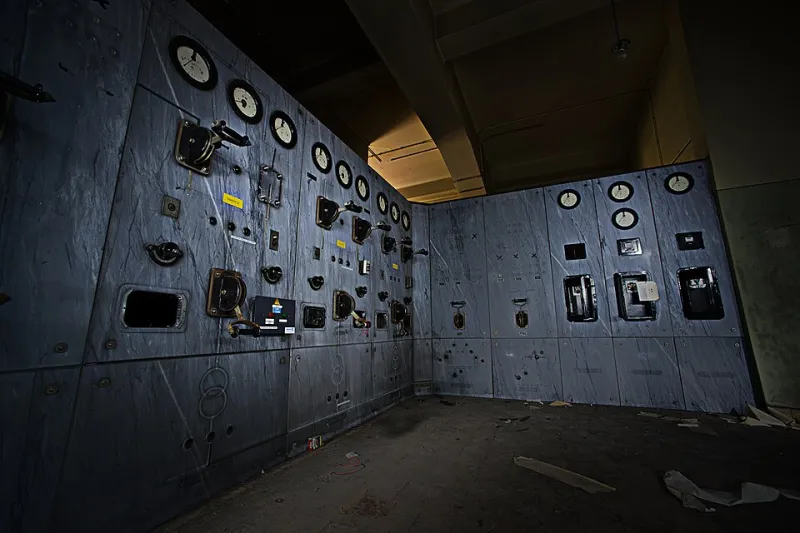
Photo: beeveephoto from Belgium, CC BY-SA 2.0, via Wikimedia Commons
The new perimeter is the production line
Canadian manufacturers are connecting more of the plant than ever before. Robots exchange data with PLCs, sensors report into edge gateways, and cloud dashboards give operations leaders a view of throughput from a laptop. The business case is compelling: faster diagnostics, better OEE visibility, and remote support that reduces travel and downtime. But every one of those connections changes the threat model. The factory floor is no longer an isolated island of proprietary controls. It is a converged network with a long life, a crowded vendor ecosystem, and very little tolerance for interruption.
Too many automation projects still treat cybersecurity as a commissioning afterthought: a firewall installed after the line is running, a remote-access tool switched on for a vendor, a spreadsheet of passwords stored on a shared drive. That approach is difficult to defend in 2026, when ransomware crews, insider risks, and state-linked actors all understand that operational technology is where availability really matters. For Canadian manufacturers, the return on automation depends on security by design, not a bolt-on appliance.
Build an asset inventory that operators recognise
You cannot protect what you cannot see. An OT asset inventory should capture more than IP addresses. It needs to record the make, model, firmware, protocol, physical location, process owner, and criticality of every controller, drive, robot controller, safety system, switch, gateway, and remote-access path on the floor. It should also note which assets are safety-related, which are regulated, and which are single points of failure.
Passive network discovery is useful because it does not disturb fragile industrial devices, but it must be paired with walkdowns and interviews. Maintenance technicians often know about the ageing PLC behind a panel that no network scan has ever touched. The inventory should be living, owned by a named role, and reviewed whenever a line is modified. In a Canadian plant with mixed-vendor equipment accumulated over decades, that discipline is the foundation for every other control.
Segment the floor, then segment again
Flat industrial networks are common and convenient, but they allow an infected engineering laptop to reach a safety controller. IEC 62443 provides a practical vocabulary for change: zones and conduits. Group assets by function and risk, then control traffic between them with industrial firewalls, routers, and where appropriate, one-way gateways. Put the supervisory layer in a demilitarised zone before it touches enterprise IT. Separate safety systems from standard control, and separate remote-access paths from everything else.
Segmentation is not a one-time design exercise. It requires change control, documented rules, and periodic review. The goal is not to make the network impossible to use; it is to make compromise containable. A well-segmented floor can lose its enterprise connection and keep producing. A flat floor can lose production because of a problem in an office printer.
Treat remote vendor access as a privileged operation
Remote support is essential for modern automation, especially in Canada where equipment vendors may be provinces away. It also creates a direct path into the plant. Access should be time-bound, approved per session, routed through a jump host, protected by multi-factor authentication, logged, and recorded where appropriate. Vendors should not connect directly from the public internet, and shared generic accounts should be eliminated.
Procurement language matters. Contracts should require vendors to follow the manufacturer's access rules, notify the plant of security patches, and provide secure configuration guidance at handover. The same logic applies to system integrators and cloud dashboard providers. A connected floor is a chain of trust, and every link needs a known owner.
Use IEC 62443 as a lens, not a certificate chase
IEC 62443 is often treated as a paperwork exercise. It is more useful as a design and assurance framework. Define target security levels for zones, apply foundational requirements such as access control, system integrity, and incident response, and use compensating controls where legacy equipment cannot be patched. Patch management in OT is rarely simple, but unmanaged firmware is not neutrality; it is deferred risk.
Security should appear in factory acceptance testing, commissioning checklists, and handover documentation. Network diagrams, account inventories, backup configurations, and recovery procedures belong in the project closeout package alongside mechanical drawings. That is how security by design becomes operational reality.
Prepare the floor for a bad day
Incident response for OT cannot be copied from the IT playbook. A factory-floor plan should address loss of view, loss of control, ransomware on engineering workstations, compromised remote access, and the possibility that restoring from backup may itself introduce risk. Operators need a manual-production fallback. Maintenance needs offline copies of configurations. Leadership needs to know who can authorise a line stop.
Tabletop exercises should include operations, maintenance, engineering, IT, legal, and communications. Canadian manufacturers can draw on guidance from the Canadian Centre for Cyber Security and sector associations, but the most important output is a tested plan for the specific plant. The connected floor is a target. The most effective defence is to assume it and engineer accordingly.