The Watt Behind the Robot: Making Energy Performance Part of Canada's Automation Business Case

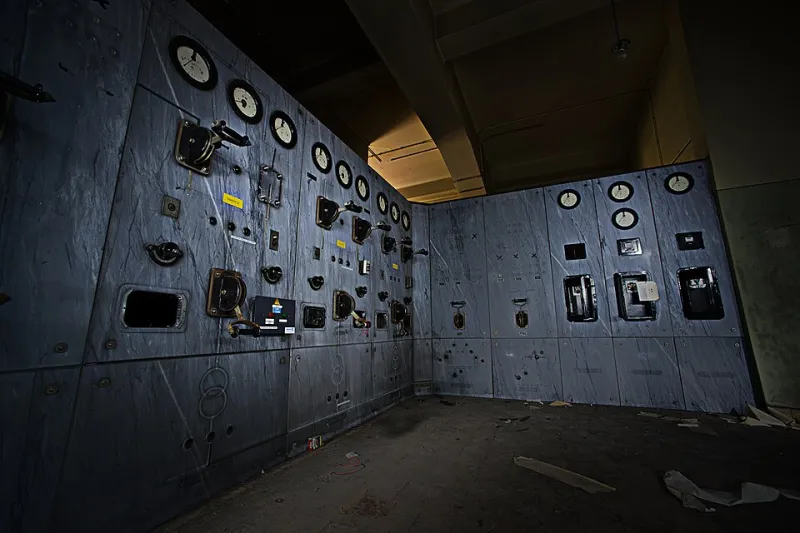
Photo: U.S. Department of Energy from United States, Public domain, via Wikimedia Commons
The missing line in the business case
Automation proposals in Canada usually justify themselves on labour availability, quality consistency, and throughput. Those are legitimate drivers. But energy performance is becoming a board-level concern, and many capital requests still treat electricity as a minor operating cost. That is a mistake. For manufacturers facing utility increases, demand charges, carbon reporting expectations, and provincial grid constraints, the energy profile of an automation project can materially change its total cost of ownership.
This is not an argument for automating solely to save electricity. Robotics and controls can increase electrical load, especially when a plant adds vision systems, servos, compressed-air end effectors, and cooling. The point is that energy performance should be designed and measured, not discovered on the utility bill. A right-sized automated line can be a power-saving asset. An oversized, always-on line can become a quiet drag on competitiveness.
Right-size the load, not just the robot
Motor sizing is one of the most overlooked decisions in automation. Engineers often specify extra margin for safety, which is prudent, but repeated oversizing across conveyors, fans, pumps, and indexers produces poor part-load efficiency. Modern high-efficiency motors and right-sized drives can reduce losses without compromising duty cycle. The same logic applies to compressed air, which is one of the most expensive utilities in a plant. Every poorly sealed vacuum cup and every unnecessary blow-off is an energy decision.
Regenerative drives are another practical lever. In applications with frequent deceleration, such as certain robot axes, conveyors, and flywheel systems, regenerative technology can recover energy that would otherwise become heat. The economics depend on the drive, the duty cycle, and the local tariff. In some Canadian jurisdictions, the payback is clear; in others, it is marginal. The only way to know is to model the actual load profile rather than rely on a generic sales claim.
Controls can be demand-response ready
Demand charges and peak-coincident pricing can punish a plant for a few hours of the month. Automation controls can be designed to help. A line can be configured to avoid unnecessary simultaneous starts, stage loads, or shift non-critical thermal processes away from peaks. With the right metering and logic, a plant can participate in utility demand-response programs without compromising production.
This is where automation and energy strategy meet. A controls architecture that exposes real-time power data can support automatic load shedding, operator alerts, and post-event analysis. Canadian utilities and grid operators offer different programs by province, so the first step is to understand the local opportunity. A plant in Ontario faces a different tariff and demand-response landscape than a plant in Quebec, Alberta, or British Columbia. Generic advice is not enough.
Measure what the line actually consumes
Energy monitoring should be part of the automation package, not an afterthought. Submetering at the line or cell level can reveal idle consumption, compressed-air leakage, unexpected peak loads, and the energy cost of changeovers. Simple key performance indicators, such as kilowatt-hours per unit produced or energy per operating hour, make the data useful to operators rather than leaving it in an engineering dashboard.
Cybersecurity and data ownership belong in this conversation too. An energy dashboard that connects operational technology to the cloud is another network path. The same disciplines of segmentation, access control, and vendor management apply. The goal is trustworthy data, not another unmanaged endpoint.
Questions for incentives and total cost of ownership
Utility incentives can improve the business case, but they should not drive the engineering. Ask what the program measures, how the baseline is established, whether measurement and verification are required, and whether the incentive is paid after commissioning. Include the cost of metering, controls integration, and staff training in the calculation. Then compare total cost of ownership across options, including energy, maintenance, software, spare parts, and downtime risk.
The robot sticker price is the least interesting number in the room. The more important questions are how much power the line draws at idle, how often it peaks, how well the motors match the duty cycle, and whether the controls can respond to a utility signal. In 2026, Canadian manufacturers have a real opportunity to make energy performance a standard part of automation planning. The technology is available. The missing ingredient is often the discipline to ask for the data before the equipment is ordered.