Closing the Technician Gap: How Canada's Manufacturing Sector Is Confronting Its Automation Workforce Crisis
Walk the floor of nearly any mid-sized Canadian manufacturing plant today and you will likely encounter the same paradox: sophisticated automated systems humming alongside help-wanted signs. The machinery is modern. The workforce to support it is not keeping pace.
Across Ontario's auto-parts corridor, Quebec's aerospace supply chain, and British Columbia's food-processing sector, plant managers are raising a concern that rarely makes the front page — they cannot find enough qualified automation technicians to keep their investments running at full capacity. The shortage is not theoretical. It is measured in delayed production runs, ballooning maintenance contracts, and automation projects that sit partially commissioned because no one on staff is credentialled to complete the work.
A Demand Curve That Outpaced the Pipeline
Canada's adoption of industrial automation accelerated sharply following the supply-chain disruptions of the early 2020s. Manufacturers who had long deferred capital investments in robotics and programmable logic controllers suddenly found compelling reasons to act. Federal incentives through programs such as the Strategic Innovation Fund added further momentum.
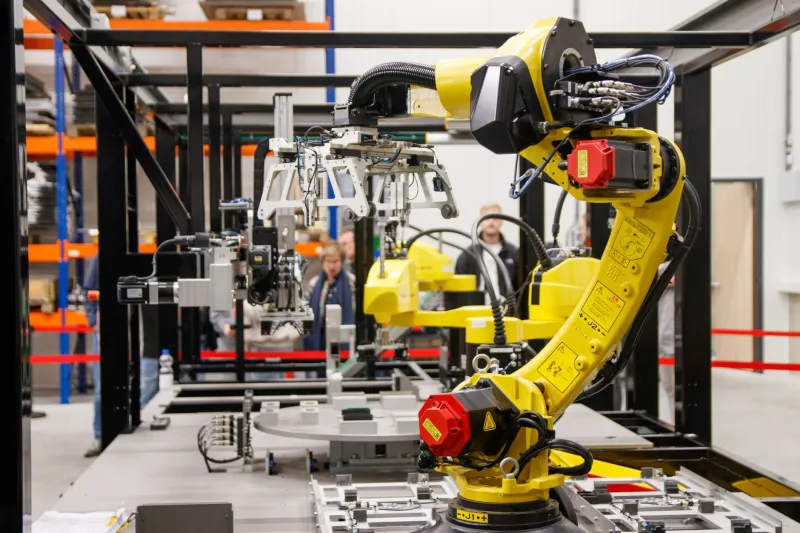
What the investment wave did not generate, at least not immediately, was a corresponding surge in the number of graduates capable of programming a FANUC arm, troubleshooting a SCADA system, or commissioning a vision-guided pick-and-place cell. Colleges and polytechnics, constrained by curriculum approval timelines, lab infrastructure costs, and instructor recruitment challenges, found themselves perpetually one step behind industry's evolving requirements.
"We were installing equipment that our own maintenance teams had never seen before," says one operations director at a Tier 2 automotive supplier in Windsor, who asked not to be named due to ongoing labour negotiations. "We budgeted for the robots. We did not budget properly for the people who would keep them running."
The Canadian Manufacturers & Exporters association has flagged skilled trades and technical roles as among the most difficult to fill in the sector, with automation-specific competencies sitting at the top of the unfilled-vacancy list in multiple provincial surveys.
Where Education Falls Short
Vocational educators are not unaware of the problem — many are vocal advocates for reform. The challenge lies in the structural lag built into publicly funded post-secondary systems.
Developing a new automation technician program requires industry consultation, curriculum development, provincial approval, equipment procurement, and instructor hiring — a cycle that can span two to four years from concept to first graduate. By the time students complete a two-year diploma, the specific technologies they trained on may already have evolved substantially.
There is also the matter of equipment parity. A credible automation technician program needs industrial-grade PLCs, collaborative robots, safety relay systems, and HMI platforms — hardware that carries six-figure price tags. Many community colleges outside major urban centres lack either the capital or the industry partnerships to equip labs at the level employers now expect.
Instructors present a further bottleneck. Experienced automation professionals who might teach earn considerably more in industry than on a faculty salary grid. Colleges attempting to recruit from the private sector frequently lose candidates to the very companies they are trying to serve.
Regional Experiments Worth Watching
Despite these structural headwinds, a number of promising models have emerged at the regional level.
In southern Ontario, a consortium of manufacturers has partnered with a local polytechnic to co-fund a dedicated automation lab, providing both equipment and practitioner instructors on secondment. Students rotate through partner facilities as part of their program, graduating with hands-on exposure to production-grade environments rather than simplified educational simulations.
In Manitoba, an apprenticeship pathway for industrial electricians has been extended to incorporate a formal automation endorsement — allowing journeypersons to credential their PLC and robotics competencies within an existing regulated trades framework rather than through a standalone diploma. Early data from the pilot suggest completion rates are strong among experienced tradespeople who would not otherwise return to full-time schooling.
Alberta's oil sands and processing sectors, long accustomed to competing aggressively for technical talent, have pioneered micro-credential arrangements with private training providers, enabling rapid upskilling of workers already employed in adjacent roles. Critics note that these programs vary widely in rigour, but proponents argue that stackable credentials are far more responsive to industry timelines than traditional semester-based delivery.
What Industry Must Own
Workforce development experts are increasingly candid that manufacturers themselves bear a share of responsibility for the talent shortage. Decades of lean staffing models, compressed apprenticeship budgets, and a preference for hiring experienced technicians over developing junior ones have left the pipeline thin.
"Industry spent years telling young people that trades were a backup plan," observes a workforce development consultant who advises manufacturers across the Prairies. "Now they're surprised the talent isn't there."
The companies making the most progress on technician recruitment are, almost without exception, those that have committed to growing talent internally — sponsoring college programs, offering earn-and-learn arrangements, and creating defined career ladders that make the automation technician role visibly attractive to young workers choosing their path.
For Canadian manufacturers staking their competitive futures on automation, the workforce equation is not a peripheral concern. It is the central one. The most sophisticated robotic cell in the world generates no value when it sits idle waiting for someone qualified to bring it back online.
Addressing that reality will require coordination between industry, educators, and government that has, until now, been more aspiration than practice. The regional experiments underway suggest it is achievable. Whether the pace of progress will match the urgency of the need remains the defining question for Canada's industrial workforce in the years ahead.