The Case for the North: Why Canada's Resource Industries Are the World's Best Autonomy Proving Ground
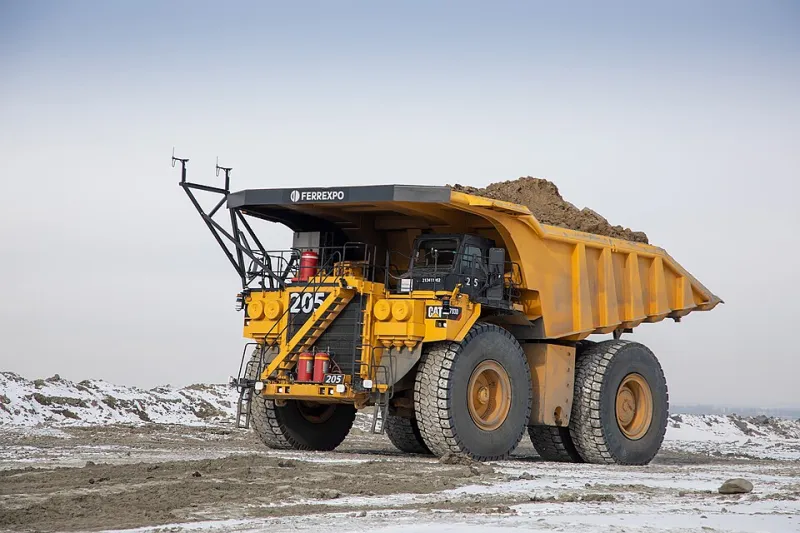
Photo: RobSimmons223311, CC BY-SA 4.0, via Wikimedia Commons
Ask most people where Canadian industrial automation happens and they will picture an assembly line in Southern Ontario. It is an understandable assumption — automotive shaped a century of Canadian manufacturing policy and identity. But as an opinion held about the future, it is increasingly out of date.
The most demanding, most consequential, and most commercially valuable proving ground for heavy-industry autonomy in the world is not a factory floor. It is a haul road in the Athabasca Basin. A cut block in the BC Interior. A drilling pad in northern Alberta. And that should reshape how Canada thinks about its industrial strategy.
Why Factories Are the Wrong Model
Factory automation succeeds in controlled environments: consistent lighting, flat surfaces, predictable part presentation, high-speed connectivity, and technicians on hand. These are precisely the conditions autonomy researchers love and precisely the conditions that make autonomy easier — meaning everyone can achieve them, and no one holds a durable advantage.
Resource operations invert every one of those conditions. Haul trucks navigate roads that change with the season. Forestry equipment works in terrain that defies mapping. Distances are measured in hundreds of kilometres, connectivity is intermittent, and the nearest technician may be a float-plane ride away. Autonomy that works here is autonomy that works anywhere. That is not a niche skill; it is the hardest version of the problem, solved first.
The Evidence Already on the Ground
This is not speculative. Remote-operated and autonomous haulage systems have been operating at oil sands mines for years, moving millions of tonnes across sites where operator fatigue, shift turnover, and labour scarcity are chronic constraints. The operators of these systems report meaningful gains in utilisation — autonomous trucks do not need rest breaks and do not lose efficiency at hour ten of a shift.
In British Columbia, autonomous and remote-controlled equipment is advancing through forestry, from tethered harvesting systems on steep slopes to automated log sorting and loading. In each case, the driver is not novelty but necessity: an ageing workforce, remote sites nobody wants to commute to, and safety records that demand improvement.
Canada's resource sector also brings a structural advantage that factories cannot: it already operates some of the largest, most sophisticated mobile equipment fleets on earth, managed by companies with the capital and the operational discipline to deploy autonomy at scale.
What Canada Stands to Gain — and Could Lose
The economic logic is compelling. Autonomous heavy equipment addresses the resource sector's most persistent constraint — people willing to work in remote locations — while improving safety in industries where fatality rates remain unacceptably high. Productivity gains compound across thousands of machines.
But the deeper prize is industrial, not operational. The companies that solve heavy-duty autonomy in genuinely harsh conditions will own a technology stack with global markets: Australian iron ore, Chilean copper, Nordic forestry, African mining. If that stack is developed here, by Canadian firms employing Canadian engineers, it becomes a next-generation export industry built on the foundations of an old one. If it is developed elsewhere and merely deployed here, Canada becomes a customer — again.
The Gap Between Head Start and Advantage
A head start is not an advantage until it is defended, and right now several things are missing.
Regulatory frameworks for autonomous heavy equipment. Provinces and territories regulate mine and forest operations, and approval pathways for autonomous machinery remain patchy and ad hoc. Clear, predictable certification regimes would let operators and technology firms plan multi-year deployments.
Connectivity as infrastructure. Autonomy at remote sites depends on communications networks that should be treated with the same seriousness as roads. Targeted public investment in rural and northern connectivity is industrial policy, full stop.
Talent pipelines pointed north. Canada produces strong robotics and AI graduates, but the sector needs programs that deliberately connect them with resource companies — co-ops, applied research chairs, and field placements in Fort McMurray rather than only in Waterloo.
Capital patient enough for the sector. Resource-adjacent technology development runs on longer horizons than software. Without domestic funds willing to back it, the intellectual property will migrate to jurisdictions that will.
An Argument Worth Having
There is a comfortable narrative in which Canada's industrial future is an extension of its automotive past. There is a more accurate one in which the country's vast geography — long treated as a cost of doing business — becomes the defining asset of its technological future. The distances, the cold, the remoteness: these are the exact conditions under which the world's most valuable autonomy will be proven.
Other countries have factories. Nobody else has the North. Canada should build its automation strategy accordingly.