Smart Spending on the Shop Floor: Five Automation Moves for Smaller Manufacturers This Decade
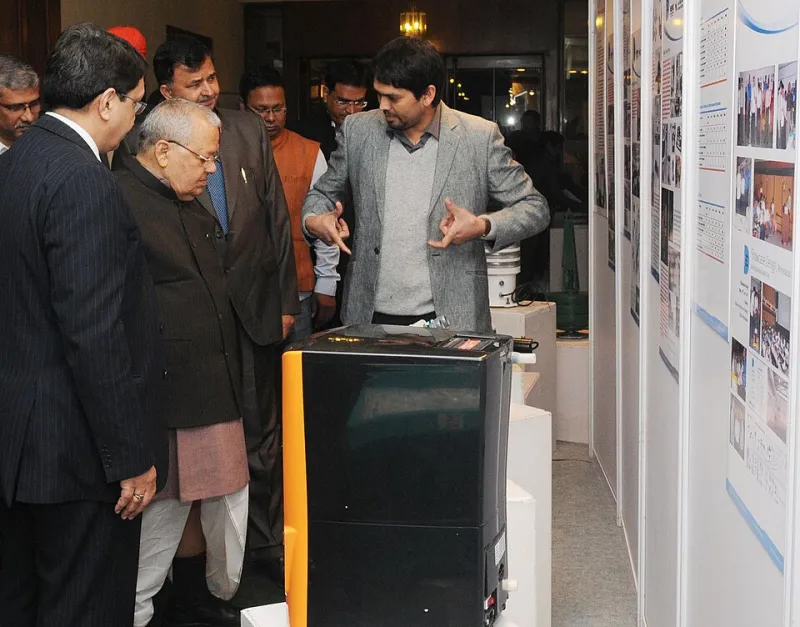
Photo: Ministry of Micro,Small & Medium Enterprises, Government of India, GODL-India, via Wikimedia Commons
The automation conversation in Canada tends to be dominated by megaprojects: automotive gigafactories, lights-out facilities, multi-million-dollar integrated lines. For the thousands of small and mid-sized manufacturers who form the backbone of the sector — the 50-person machine shop in Kitchener, the fabricator in Moncton, the food processor in Saskatoon — that conversation can feel irrelevant, even discouraging.
It shouldn't. Meaningful automation is available at almost every budget level, and the firms that start modestly and build deliberately tend to outperform those that wait for a transformative (and unaffordable) moment. Here are five investments that consistently deliver returns for Canadian SMBs, along with what they realistically cost and how to shrink the bill.
1. Machine Monitoring Sensors
Typical investment: $10,000–$60,000 for a first deployment
Before automating any physical process, understand the one you have. Retrofit machine monitoring — vibration, temperature, cycle-count and utilisation sensors feeding a simple dashboard — reveals downtime patterns, bottleneck machines, and idle capacity that most owners genuinely don't know they have.
The payback is often surprisingly fast because it comes from recovered capacity rather than new equipment. A shop that discovers one CNC is running at 45% utilisation has found money. Typical payback runs 12–24 months, and the data infrastructure becomes the foundation for everything that follows.
2. Conveyor and Material-Handling Retrofits
Typical investment: $25,000–$150,000 depending on scale
Full material-handling systems are expensive; targeted retrofits are not. Replacing manual transfer between two workstations, adding a powered conveyor segment to eliminate repetitive carrying, or installing a simple indexer can remove some of the most physically punishing and error-prone tasks on the floor.
This is also among the most labour-friendly forms of automation, which matters in a tight hiring market. It removes strain, not jobs — a message that eases workforce resistance.
3. A Palletising Cell
Typical investment: $80,000–$250,000 installed
End-of-line palletising is the classic first robot for good reason. The task is repetitive, physically demanding, hard to staff, and easy to justify numerically. Modern collaborative palletisers have pushed entry costs down sharply, and a well-specified cell can run multiple shifts without overtime premiums.
Manufacturers in food, beverage, and packaged goods routinely report payback inside two to three years, faster where workplace injury costs from repetitive lifting are factored in.
4. Cloud MES or Production Scheduling Software
Typical investment: $500–$2,500 per month, subscription-based
Cloud-based manufacturing execution and scheduling platforms have collapsed the cost of what used to require an on-premise IT project. For an SMB, the value shows up in quoting accuracy, on-time delivery rates, and reduced expediting — the quiet profit leaks that spreadsheets conceal.
Pair this with item one: monitored machines feeding a cloud MES is a genuinely modern operation, achieved for a fraction of legacy costs.
5. Vision-Assisted Inspection on Critical Operations
Typical investment: $30,000–$120,000
You do not need a full quality lab. A single camera-based station at one critical operation — checking presence, orientation, or dimensional tolerance — catches defects at the source instead of at the customer. For suppliers into automotive or aerospace tiers, where a single escaped defect can cost a contract, this is often the highest-stakes dollar on the list.
Funding the Bill: Programs Worth Knowing
The single most underused resource among Canadian SMBs is public funding.
- NRC IRAP provides advisory services and conditional contributions to small and medium-sized enterprises for technology adoption — historically one of the most accessible federal programs for exactly this kind of investment.
- Provincial programs such as Ontario's manufacturing-focused funds, Quebec's support via Investissement Québec, and various Western Canadian productivity grants cycle regularly and can offset 15–50% of qualifying costs.
- The Scientific Research and Experimental Development (SR&ED) tax credit can apply where automation projects involve genuine technical uncertainty.
- CAE and BDC financing offer equipment-focused lending structures suited to staged adoption.
An experienced integrator should be able to point you toward programs relevant to your province; many now maintain in-house funding specialists.
The Sequencing That Matters
None of these five investments is transformative alone. Together, sequenced deliberately — monitor first, automate the pain points the data reveals, digitise the scheduling layer — they compound. The manufacturers thriving this decade won't be those who spent the most on automation, but those who spent it in the right order.